Piko's electronics (biped)
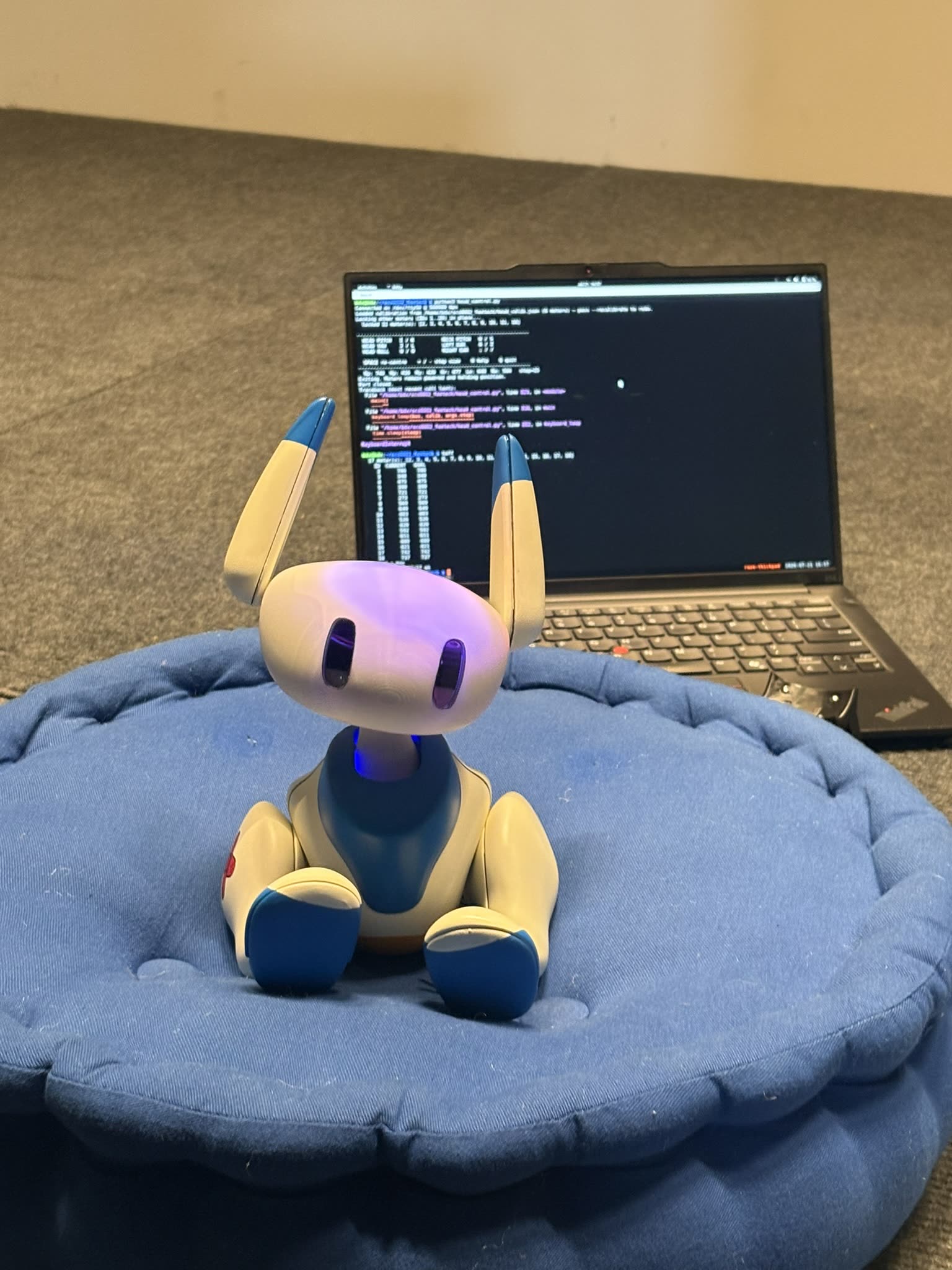
I designed the boards for Piko, a small biped, at Eyecandy Robotics. The hard one was the power board — 17 motors out of one battery.
what it earnedone power board, 17 motors
apr – aug 2026 · team — I owned the electronics · Bangalore · deployed
I spent five months in Bangalore as the electronics and hardware engineer at Eyecandy Robotics. They make consumer robots that are meant to be liked rather than useful, which is a harder brief than it sounds. My job was the boards inside the small one, Piko.
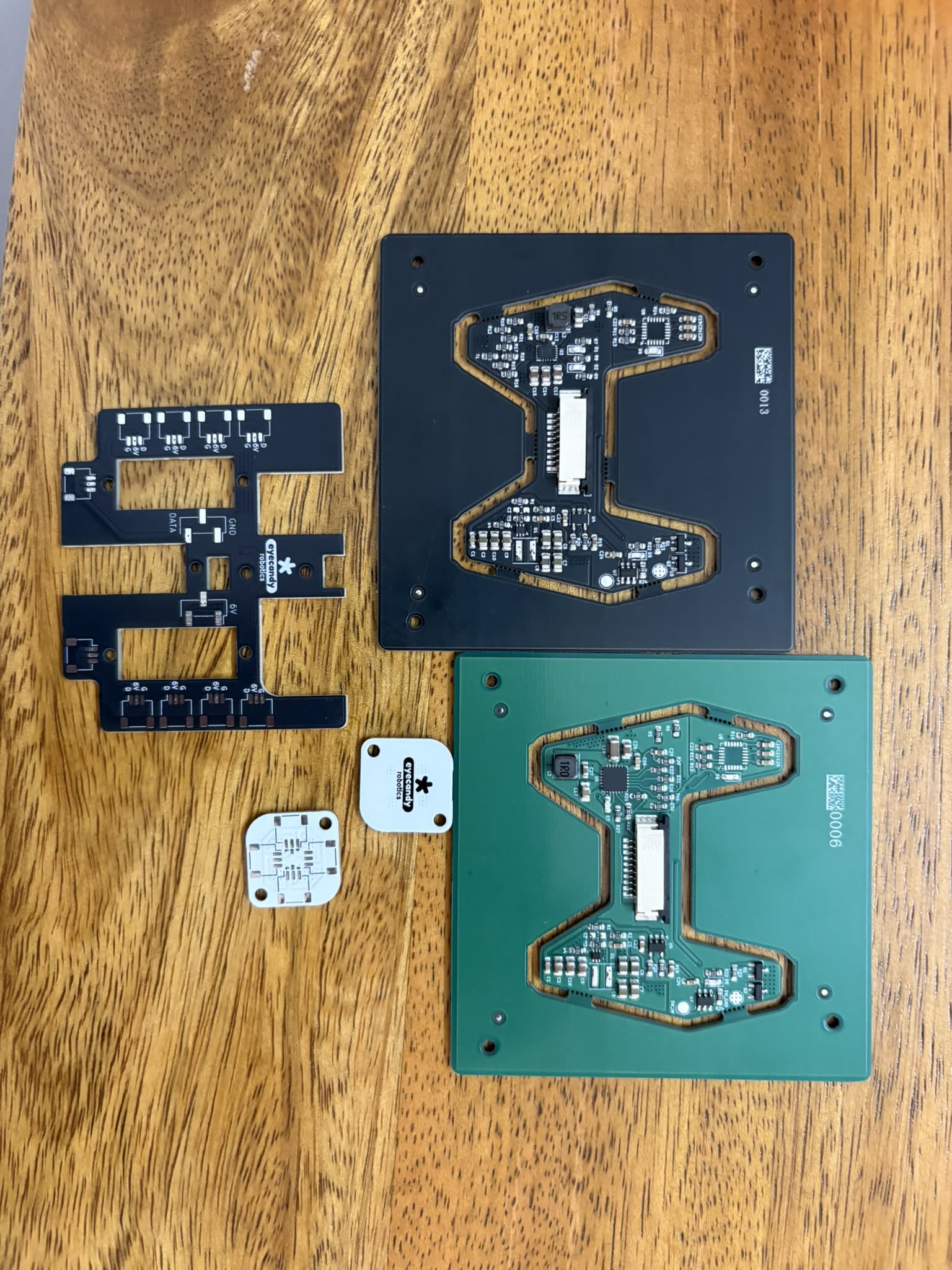
Three of them mattered, and they got harder in that order. (There was also a microphone board and the small connector boards that tie everything together.) I owned schematic capture, routing, DFM review and the fabrication output for each one.
The compute carriers. Boards for a Raspberry Pi Zero 2W and a Milk-V module, breaking out an MPU6050 IMU, a buffered Feetech servo bus, per-leg force-sensitive resistors conditioned through LM393 comparators, and a ReSpeaker microphone array. Not conceptually difficult, but it’s the board everything else plugs into, so I put test points on every rail and solder jumpers on anything I might want to bypass — you find out very fast during bring-up whether you left yourself a place to put a probe.
The motor driver. Drivers for the servo bus, and the audio circuit — a PAM8403 amp — ended up living on this board too. Putting audio next to switching motor current is a bad idea that I had to make work: an amplifier picking up motor noise sounds exactly like a robot that is broken. Grounding, and where I let the switching loops run, stopped being a detail and became the design.
The power board. This was the real work. One small pack has to run 17 motors, and the board also has to charge it, protect it and step it down. So a BQ25887 doing 2S charging with cell balancing, an MP2672 alongside it, and TPS562202 bucks for the rails — all inside the volume of a robot you can pick up with one hand.
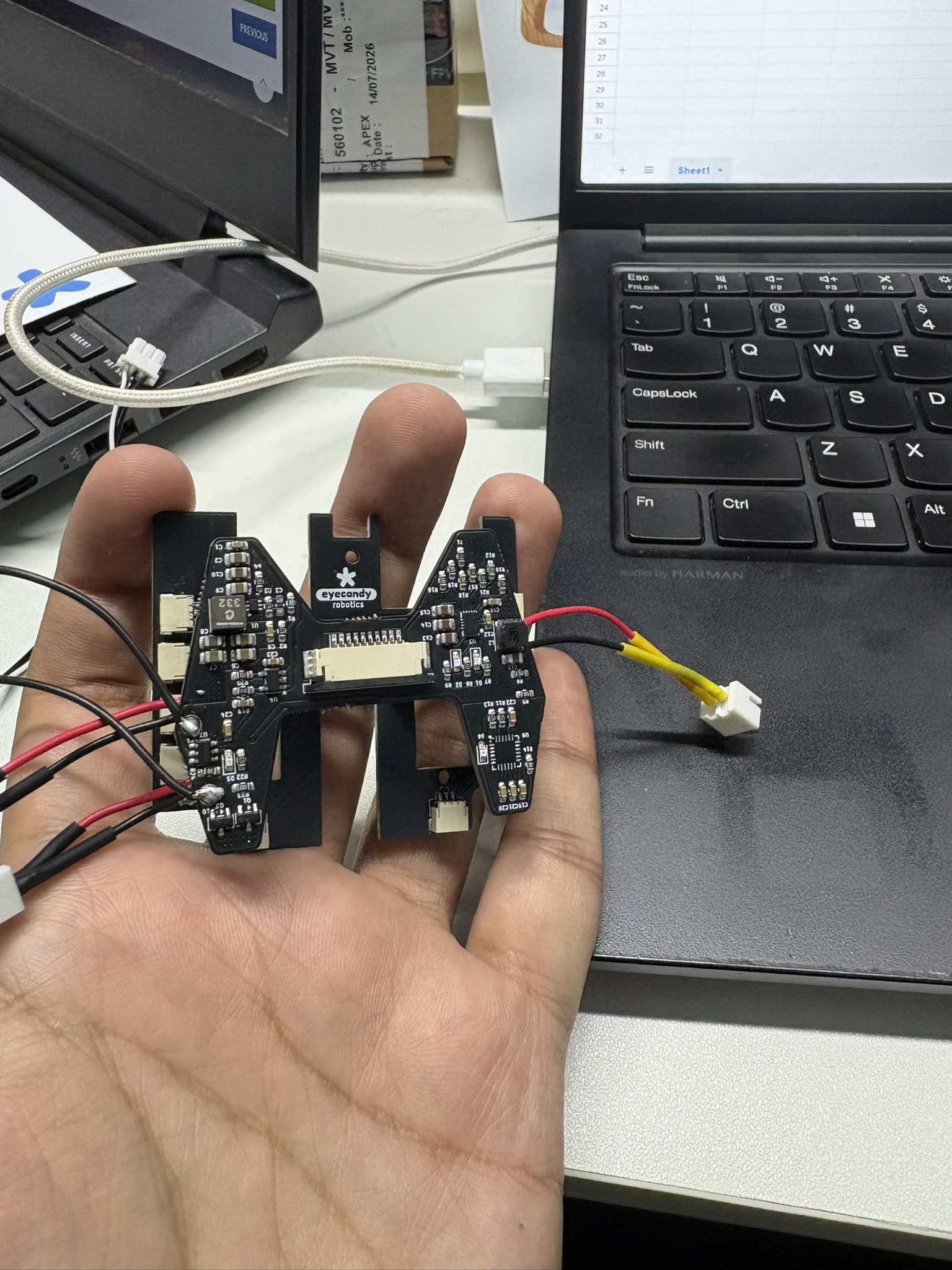
17 motors is the number that makes it interesting. They don’t all draw current politely at the same time — a robot standing up is every servo pulling at once, and the sag from that has to not reboot the compute module. Sizing for the average would have been comfortable and wrong.
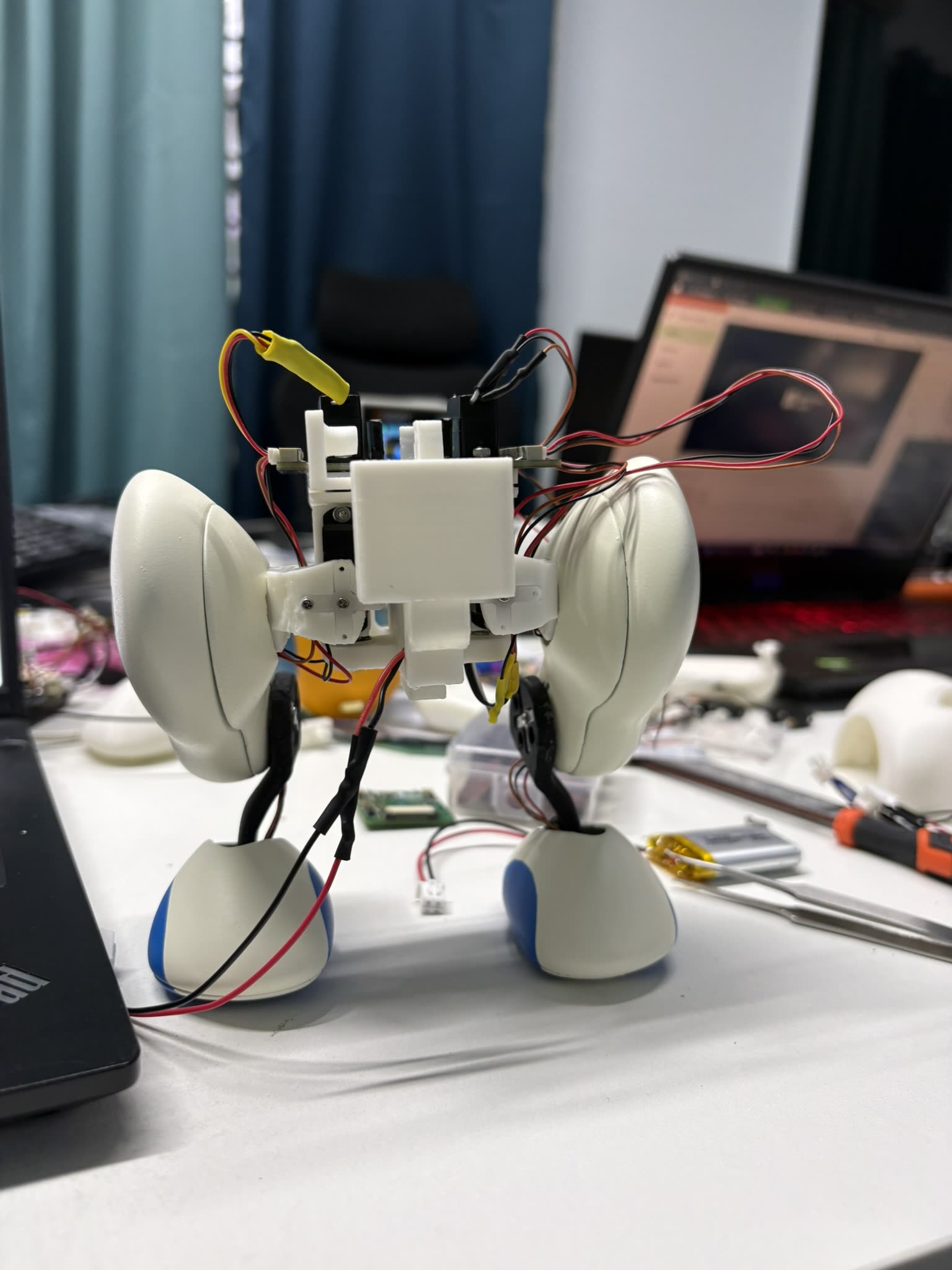
The rest of the time I was debugging hardware across everything in the building, not just Piko — whatever was broken that day, at whatever layer it was broken. A lot of it was other people’s boards and other people’s bots. That turned out to be the part I learned most from. You get a much better feel for what a bad design looks like from the outside than from inside your own.
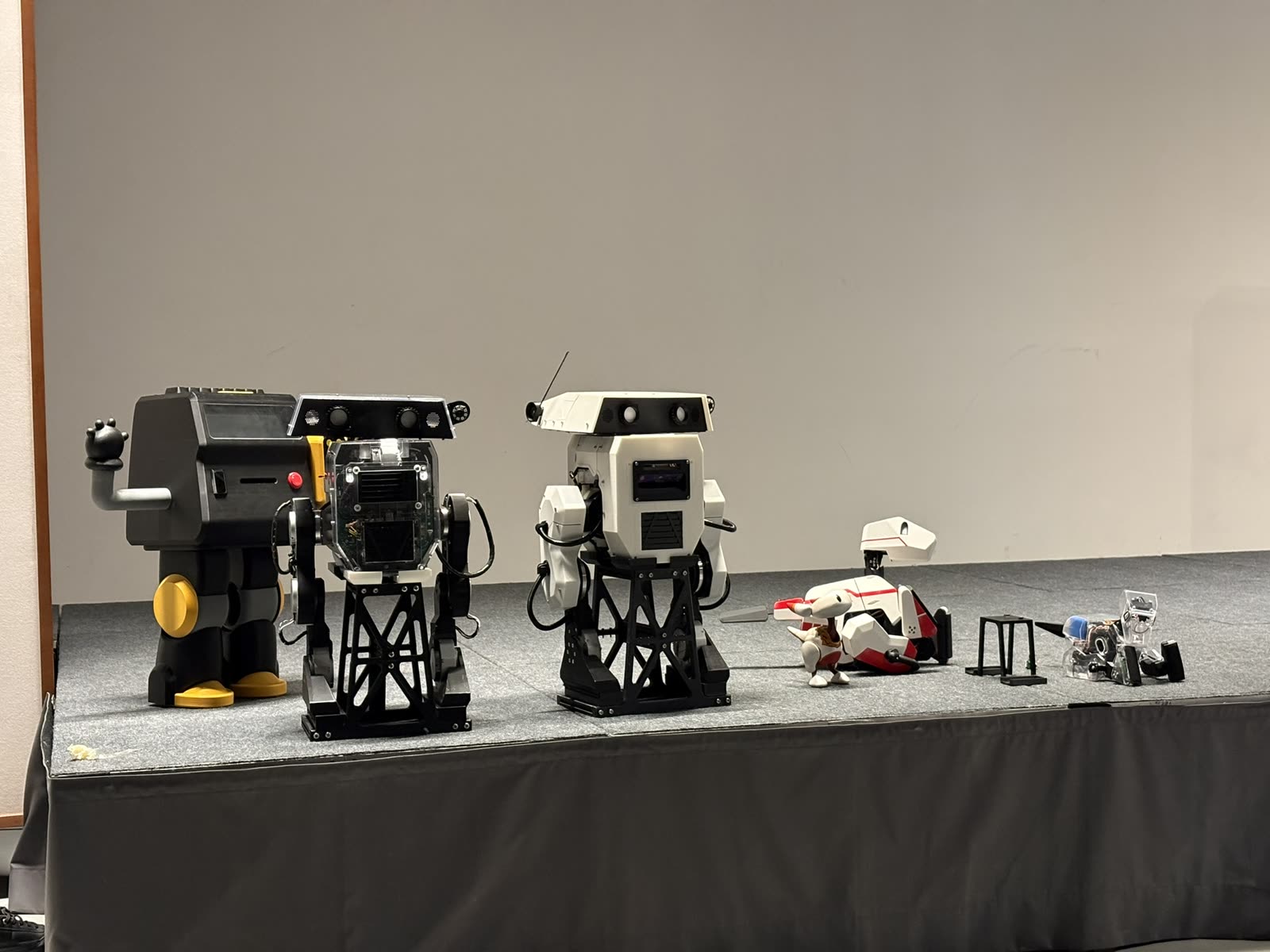
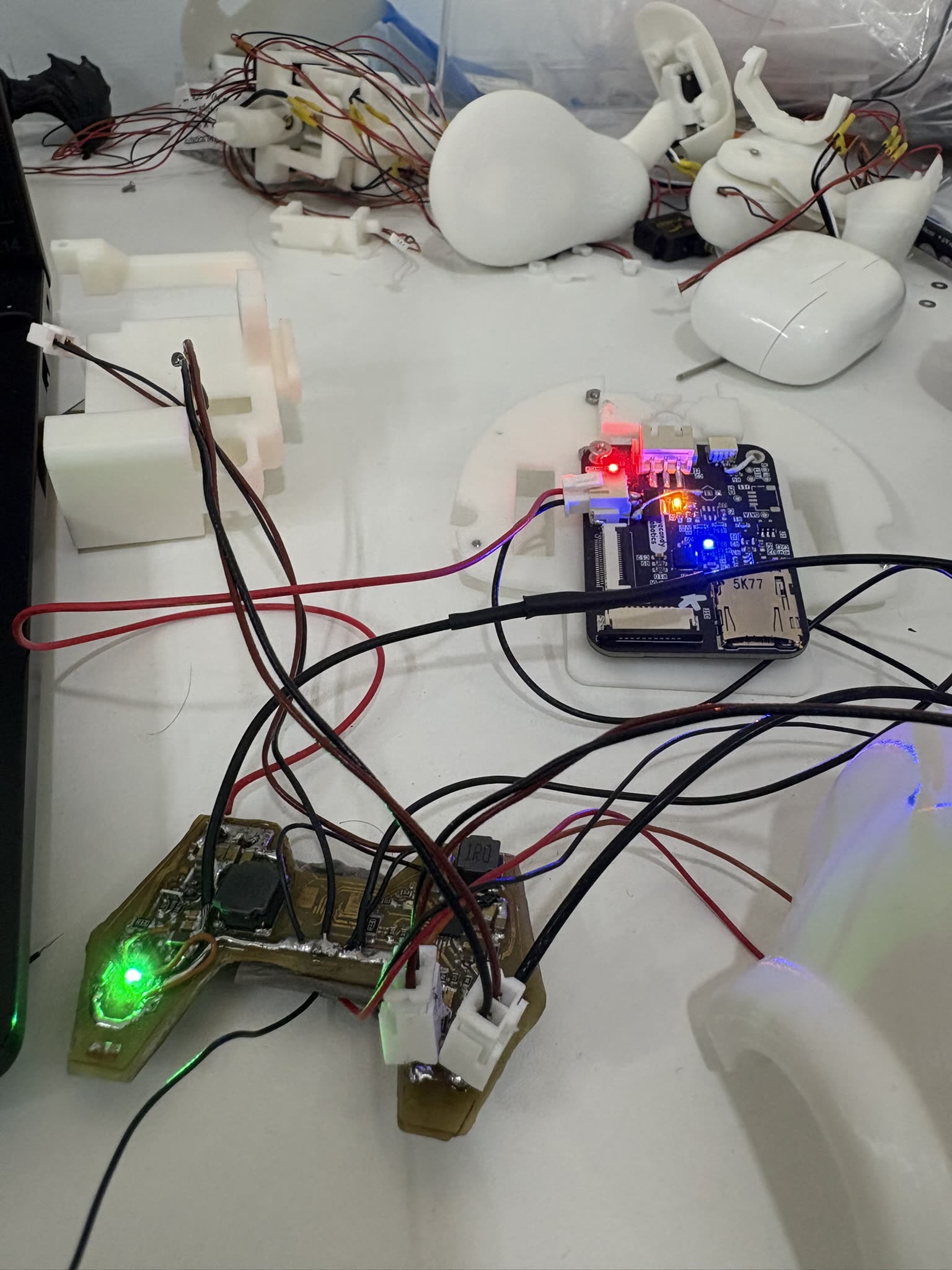
Piko works. I can hold the boards I drew in my hand, which is still the part I find slightly unreasonable.
made with
- KiCAD
- Raspberry Pi Zero 2W
- Milk-V
- BQ25887
- MP2672
- TPS562202
- MPU6050
- LM393
- PAM8403
- ReSpeaker mic array
- Feetech servo bus
- DFM review
- oscilloscope